

WA and Queensland Battle for Tradies: What It Means for Jobs
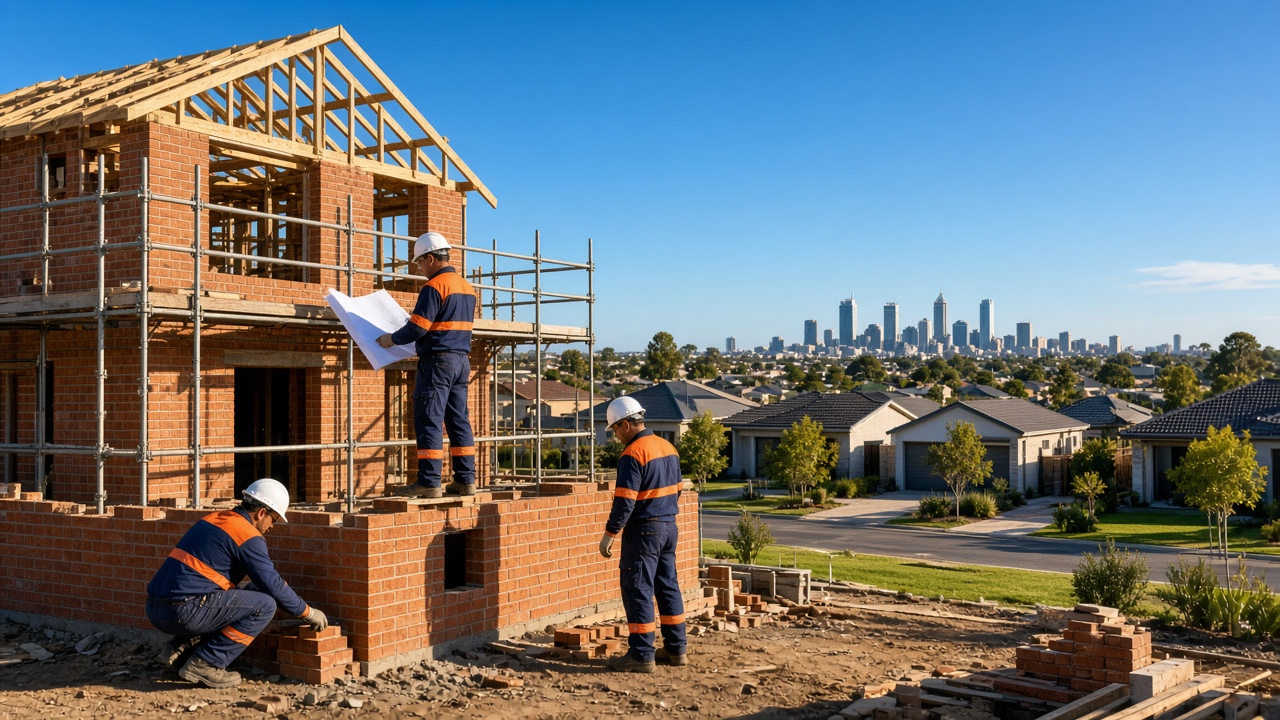
A Perth builder hired 12 Bathla tradies in a week. Here is why WA and Queensland are fighting for workers and what it means for your property career.
Here's a story that says more about the Australian property jobs market than any spreadsheet could. On a Monday, Cameron Lade heard that tradies from collapsed Sydney developer Bathla were looking for work. On the Tuesday, the boss of Perth-based Summit Homes put a couple of construction managers on a plane to Sydney. They interviewed bricklayers, carpenters and painters on the Wednesday and handed out contracts on the Friday. Twelve tradies, hired inside a week, as reported by the Australian Financial Review on 30 October 2026.
That's not a hiring process. That's a talent raid. And according to the AFR, it's a sign of things to come: with residential building expected to soften in NSW and Victoria over the next 12 months, the two resource-rich states, Western Australia and Queensland, are scrambling to pull skilled workers north and west.
I love this story, honestly. Not because anyone lost their job (that part is genuinely tough), but because it shows how fast good people get snapped up when the market is this tight. If you work in or around construction and property right now, you have more leverage than you might think.
Why WA and Queensland are hunting so hard
The numbers back up the urgency. The Housing Industry Association's Trades Report, released on 22 October 2026, found every market in Australia is still short of skilled trades. The worst shortages are in regional Queensland, followed by regional South Australia, then Brisbane and Perth together. Melbourne, by contrast, is sitting close to balance. So if you're a chippy in Melbourne wondering why Brisbane builders are suddenly sliding into your DMs, that's why.
HIA also found trade prices rose 6.6 per cent in the year to September, the fastest pace in four years and more than double the rate of wage growth across the wider economy. Bricklaying is the tightest trade of all, followed by tiling, carpentry and roofing, and HIA says electrical shortages have "worsened dramatically" in the last six months. Its headline estimate: Australia needs an extra 83,000 skilled tradespeople to build the homes we need.
Zoom out further and it gets bigger. Master Builders Australia said on 6 October that its Workforce Blueprint projects a shortage of more than 900,000 construction workers by 2035, with housing targets, Olympic infrastructure for Brisbane 2032 and major projects all competing for the same people.
The Bathla effect
The other half of this story is Sydney. Bathla went into administration at the end of August owing about $3.4 billion, with roughly 2,000 homes under construction across NSW. The ABC reported on 24 September that 213 staff were stood down in early September, then a further 125 when funding ran dry, leaving a core team of 67 to support the administration. The fallout is still unfolding: on 29 October the AFR reported that administrators Teneo had gone to court to try to take control of Bathla companies that had been kept out of the process.
When a developer that size falls over, hundreds of skilled people land on the market at once. What Summit Homes did is simply what smart employers do: move first, move fast, and make it easy to say yes.
What this means if you're job hunting
If you're a tradie, site supervisor, project manager or estimator, especially in Sydney or Melbourne, it's worth taking a serious look at Perth, Brisbane and regional Queensland. Builders there are competing hard, and that usually shows up as better rates, relocation help, faster decisions and quicker paths to supervisor and manager roles. Do your homework on cost of living and the pipeline of work, but don't dismiss a move just because it feels big.
The ripple runs well beyond the tools, too. Every extra crew on site needs contract administrators, quantity surveyors, schedulers, WHS advisers, procurement people and, eventually, sales and leasing teams to sell or lease what gets built. A builder that's growing in Perth or on the Sunshine Coast is a builder that's hiring in the office as well as on site.
If you've been affected by Bathla or another collapse, my practical advice is this. Update your CV this weekend and lead with the projects you delivered, the size of the crews you worked with and the tickets you hold. Ring builders directly rather than waiting for ads, because the fast movers are hiring before roles ever hit job boards. AI assistants like Grok Bot, Claude or ChatGPT are genuinely handy here: paste in a job ad and your CV and ask for a tailored version and a short cover note. Then check every word yourself, because you know your work better than any tool does.
And across the ditch?
New Zealand is telling a similar story. RNZ reported on 28 October that hands-on roles, including trades and construction, made up 70 per cent of all listings on Trade Me Jobs, and those roles are holding up better than the market overall. Canterbury listings jumped 15.1 per cent on the previous quarter, and recruiters said demand for skilled tradespeople in the South Island is very strong, even as they struggle to find people willing to switch roles.
My take
Yes, higher rates and falling prices are making headlines, and yes, some developers are hurting. But the work on the ground hasn't stopped, and the people who build, manage and sell property are still in short supply. When an employer will fly interstate on a Tuesday to sign you by Friday, that's a market rewarding skill and hustle. That's a good place to be.
So back yourself. Know your value, be open to a move, and talk to the employers who are clearly hungry for talent.
Ready for your next move? Browse the latest property and construction jobs on PropertyRoles and find the builder, agency or developer that's ready to snap you up.