

NZ Consents Up 18% as Jobless Hits 5.7%: The Property Jobs Gap
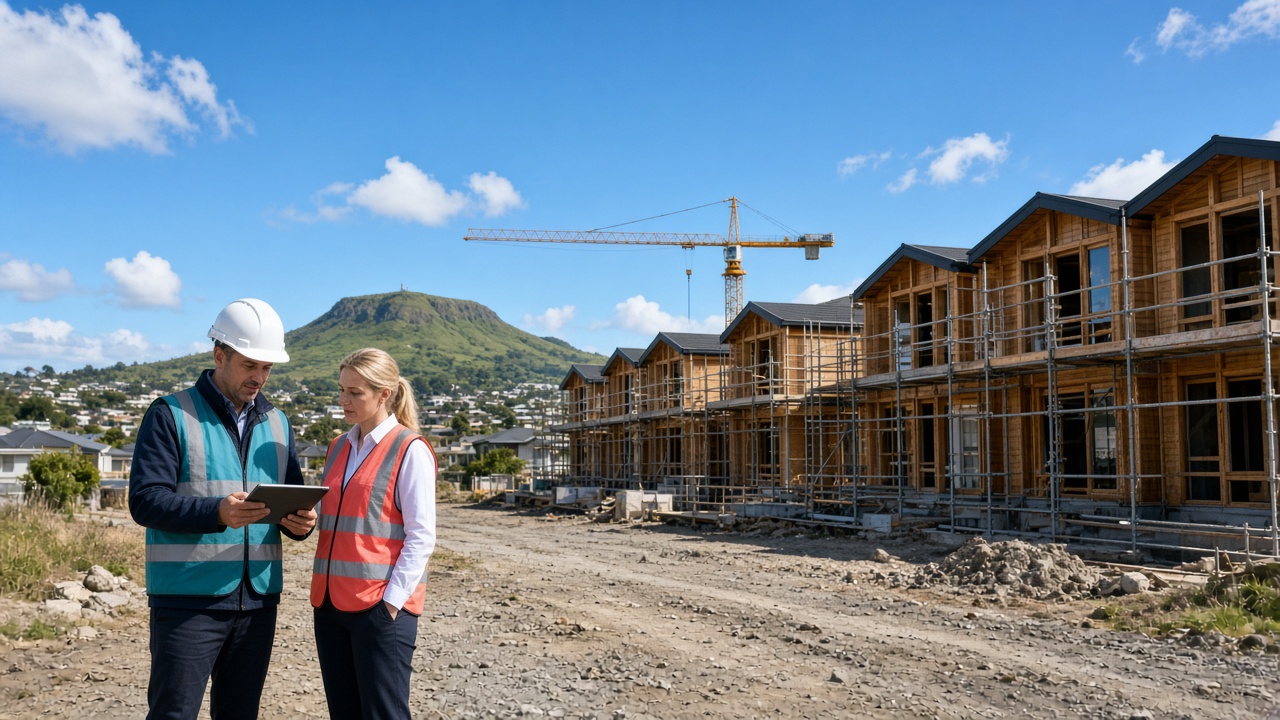
NZ consented 41,091 homes in a year while unemployment hit 5.7%. Here's why the gap between projects and people is a real opening for property careers.
Two numbers landed out of New Zealand this week, a day apart, and on the surface they don't seem to fit together.
On Tuesday 3 November, Stats NZ reported that 41,091 new homes were consented in the year to September 2026. That's up 17.8% on the year before and the strongest September-year result since 2022, as interest.co.nz reported.
Then on Wednesday 4 November, the same agency said unemployment had risen to 5.7% in the September quarter. That's 174,000 people out of work and, as RNZ put it, the highest level in nearly 11 years.
More homes being approved, and more people out of work. How do those sit together? The answer matters for anyone building a career in property on either side of the Tasman.
What the consent numbers actually say
The headline is good news. Of those 41,091 consents, 19,228 were stand-alone houses, 17,756 were townhouses, 2,356 were apartments and 1,751 were retirement village units. The value of residential work consented rose 15.2% to $20.7 billion.
But read past the headline and it gets more mixed:
- The monthly number fell. September consents were down 7.9% on August in seasonally adjusted terms, with 3,570 new homes consented in the month (RTTNews).
- Apartments are going backwards. They were the only type of home to fall, down 10.7% for the year.
- Commercial building is still shrinking. Non-residential consents fell 3.1% to $8.7 billion, the third annual fall in a row. Factories were down 27.6% and offices down 20.5%. Hotels and motels (up 29.7%) and education buildings (up 11.9%) were the bright spots.
- It's a townhouse story in a few regions. B2B News points out that the growth is led by Canterbury, central Otago and Auckland, and that a consent isn't a house. Some approved projects are sitting in drawers while builders wait for costs and finance to make sense.
So it's a recovery, but a careful one. I'd call that healthy, not scary.
The real story is people, not projects
Here's the line from this week that stuck with me. At Hubexo's construction leadership forum in Auckland, APAC president Ashleigh Porter said New Zealand doesn't lack projects, infrastructure need or policy intent. As The Post reported, she put it simply:
"What the industry has lost is the firms and people to convert that pipeline into construction."
Hubexo counts 768 construction firms liquidated in the past year and around 16,000 construction jobs gone over two years. And 57% of builders named talent as a key challenge.
That's the gap. The downturn pushed people out of the industry. Some went to Australia, some retrained, some are now in that 174,000 unemployed figure. The work is now coming back faster than the people.
Recruiters see it too. Hays' New Zealand construction salary snapshot found 75% of organisations report capability gaps, and 36% of construction professionals are actively job hunting. Its hardest-to-fill list reads like a property careers menu: project managers, site managers, construction managers, quantity surveyors, contract administrators, estimators and design managers.
Where I think the jobs are
If you're in New Zealand property right now, or thinking about it, this is where I'd be looking:
- Townhouse delivery. Townhouses are close to half of all new homes. That means site managers, project managers, estimators, QSs and contract admins who can deliver medium-density projects on tight margins.
- Canterbury, Otago and Auckland. That's where the consents are. Regional work often comes with faster promotion because there are fewer people chasing it.
- Hotels, education and retirement living. Not the obvious sectors, but they're growing while offices and factories shrink. Retirement villages alone had 1,751 units consented.
- Property services after the build. Every finished townhouse needs a sale, a conveyance, often a property manager and sometimes a body corporate. That work lasts for years after the builders leave.
- Commercial leasing and asset management. With office and industrial building down, the people who keep existing buildings full and well-run become more valuable, not less.
One honest point: the jobs market overall is soft. RNZ noted that casual and fixed-term roles rose by nearly 20% over the year. If you're job hunting, a contract role on a live project can be a great way in. Treat it as a foot in the door, not a step down.
Tools that help you move faster
The people winning roles right now are the ones who show up ready. AI tools like Grok Bot, Claude or ChatGPT are handy for tailoring a CV to a specific project role, turning your site experience into clear achievements, or preparing for interview questions about cost control and programme. They won't do the job for you, but they'll get you to the interview quicker.
My take
I'm optimistic about this. The worst of the New Zealand building downturn looks to be behind it, the pipeline is filling, and the industry is openly saying its biggest problem is finding good people. That's exactly when careers move fastest. If you held on through the tough years, your experience is now worth more. If you left, the door is open again. And if you're new, there's rarely been a better time to ask for a shot.
The trick is to follow the work: the right regions, the right building types and the roles that turn consents into finished homes.
Ready for your next move? Browse the latest property jobs across Australia and New Zealand and find the role that's waiting for you.